

Fox Point was a major port of entry for
Cape Verdeans arriving in the United States of America
They arrived in 1892 on the Nellie May, a packet boat owned by Antonio Coelho.
These early arrivals, the first voluntary immigrants from sub-Saharan Africa and Rhode Island’s first Cape Verdean settlement, grew from the late 19th through the mid-20th century in the historic Fox Point area of Tockwotton and Sparrow Parks, near the waterfront and the Port of Providence, adjacent to the docks where the packets landed.
The Krioulo language, kinship, and faith were the glue that bound together the close-knit Cape Verdean neighborhood of tenement homes and businesses that stretped contiguously through Tockwotton, then along South Main, Pike, Brook, Traverse, and Wickenden Streets. Cape Verdeans worked as longshoremen, domestics, cooks, and factory workers in manufacturing, textile mills, and the jewelry industry.
Once a bustling port for loose cargo-lumber, coal, and scrap iron, most of the men from “the Point” worked the boats as proud members of Local 1329 of the I.L.A. (the International Longshoremen’s Association), and women worked as domestics in the wealthy homes on the affluent Eastside or the jewelry industry.
The thriving, self-sufficient street stretched contiguously from Planet Street and South Main Street to India Point; Wickenden and Brook Streets up to John Street; and Benefit, Traverse, and Brook Streets to the river. The locus of Cape Verdeans’ “lived history” was South Main Street, home to significant community institutions, organizations, and businesses.
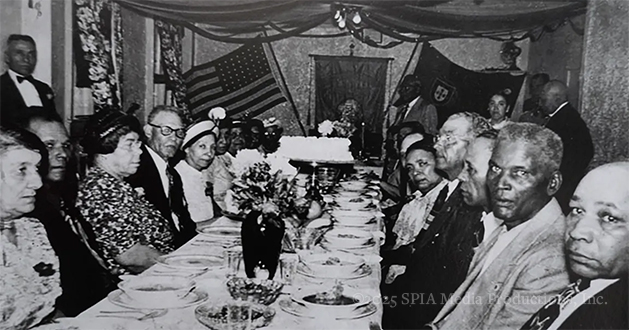
St. Antonio Association, 1934
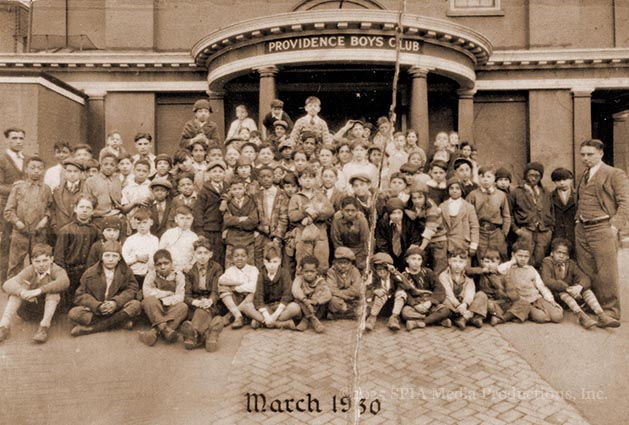
Boy’s Club, 1929

Local 1329 of the I.L.A. (International Longshoremen’s Association, 1933
The community’s anchor institutions, located within a two-block radius on South Main Street between Power Street and Williams Street, were the Boys Club (1929), Local 1329 of the I.L.A. (International Longshoremen’s Association), 1933, the first black, predominantly Cape Verdean Union; the St. Antonio Association, 1934, a beneficent organization that provided health and death benefits to the non-English-speaking immigrants. Nearby were Our Lady of the Holy Rosary Church for the predominantly Catholic immigrant community and Sheldon Street Church, founded in 1905, and the first Cape Verdean Protestant Church in America.
In the mid-20th century, urban renewal, gentrification, the construction of 1-195, and the expansion of Brown University and the Rhode Island School of Design displaced the Cape Verdeans in the Tockwotton neighborhood of Fox Point. The concept of Historic Preservation, guided by the College Hill Plan of 1960, created the blueprint for preserving ‘historic fabric’ or structures with historical or architectural significance. Meanwhile, areas or homes designated as ‘urban blight’ became ‘infill’, displacement ripped the heart out of our community that stretched along South Main Street; the heart of our community was dismantled, condemned, and razed. and were slated for demolition.
20th ANNIVERSARY
“SOME KIND OF FUNNY PORTO RICAN?” AN AMERICAN STORY
(2006) producer/Director Claire Andrade-Watkins
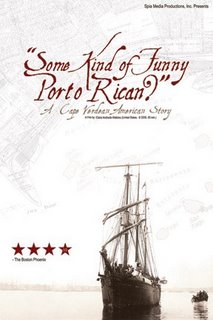
“SOME KIND OF FUNNY PORTO RICAN?”: A Cape Verdean American Story (SKFPR) (2006)
A documentary by producer/director Claire Andrade-Watkins about the thriving, vibrant, multi-generational community in Fox Point, Providence, Rhode Island, displaced by urban renewal, gentrification, the construction of I- 195, Brown University, and historic preservation.
Honoring a Legacy: “Chief” Manuel Q. Ledo
Leah Hooks, the grand-daughter of Manuel Q. Ledo, talks about her grandfather, his journey from Brava, Cape Verde to Rhode Island, and his role as an important local, national and international labor organizer. He, along with John F. Lopez, organized Local 1329 of the I.L.A. (International Longshoremen’s Association) in 1933, the first predominantly Cape Verdean Union on the eastern seabord. Leah highlights the contributions of Local 1329 and the Cape Verdean community to the economy of Rhode Island and New England.

Your tax-deductible contribution to CID support SPIA’s ongoing educational, documentary, archival projects, immersive experiences, forward-facing public initiatives, legacy projects, events, walking tours, and digital mapping of a chronological timeline that reconstitutes the history of Rhode Island’s first Cape Verdean neighborhood on existing and emerging digital platforms.
The mission of SPIA Media and the TFPCVHP (Tockwotton Fox Point Cape Verdean Heritage Project) team is to preserve and document the history and memory of the Tockwotton Cape Verdean community, designated a 2022 Providence Preservation Society, MEP (Most Endangered Property), as an endangered ‘intangible memory’ of the Tockwotton Fox Point Cape Verdean community displaced by historic preservation, urban renewal, I-195, and the expansion of Brown University and the Rhode Island School of Design.